Saturday, 26 April 2014

Individual Evaluation

What was effective working in a group was how we could both split the roles, and play to each other's strengths accordingly. We could both give ideas to each other and build from them adding more variety to our planning for the video/website/poster and giving us more options to work from.

We also had our key roles assigned to us, so the workload was evenly split and we could create the best possible product. My role was the filming of the video and being behind the camera, as well as deciding the basic narrative of the video and how it should be played out. I feel I did succeed in this role and did it well, with the camera shots used being of a proper standard and fitting the conventions of the Nu Metal genre, which I see as a bigger success considering I wasn't too familiar with the genre prior to this coursework.
I had also been familiar with using cameras before and behind mainly behind them in both my GCSE and AS Media coursework.

I also personally feel if I had been working as an individual it would have been inferior to the work produced due to the lack of another person with different artistic vision to form an understanding with and create more ideas. This being evident in the group work has helped the video become more appealing to both me and Anthony and hopefully to our target audience.

 If I had been working as an individual I most likely would have chosen a different genre to centre my work around, one I'm more familiar with. While I can follow the codes and conventions better this way, by doing something different it created a new experience in my journey through A Level media and now I feel competent working with the genre I have done and would keep this improved standard if I was to make another video from the genre. I would have also had the full creative control over the project which could have both strengthened and weakened the final outcome, reflecting what I do well on (creativity, vision) and what I lack (technical side, editing).

 As a result of working in a group I missed out on familiarising myself with technologies such as editing software, which was left purely to Anthony. This would have been a worthwhile skill to pick up and one regret of my time doing this project.

I am on the whole proud of the work me and Anthony have produced, and glad I took up this project as it has gave better insight into the difficulties involved in making a video as well as the payoff of having a finished video for others to enjoy.

Wednesday, 12 February 2014

Group Reflection

Here is an update on how my group is getting on:

All our research and planning is done, and we are currently in the middle of filming our music video with the group, with mainly the performance left to film. We have some small extra bits to film for the narrative portion of our production to finish it up which we will get done over the next week. We have had a lot of fun during the filming, especially with the supporting roles provided by other people we know and working with them. With hard work we should have our video finished and edited over the next three weeks.

Our Twitter account is up and running and fairly active, with a sufficient amount of followers and often updates.
I will try to update this blog more as we progress further, as well as on the group blog.

Monday, 27 January 2014

Blumler and Katz (Uses and Gratifications)

Blumler and Katz' theory concerns what the audience does with the media as opposed to what it does to the audience and the influences it has on them. They present the use of media in terms of the gratification of social and psychological needs of the individual themselves.
They argue people's needs influence how they use and respond to a medium, such as the mood of someone influencing their choice of media for example someone with stress choosing more relaxing content and those with boredom choosing exciting content. The same TV programme can also gratify different needs for different people. Different needs can be associated with different personalities, backgrounds, stage of maturation and social roles. There are four different reasons for media use:

Information - Finding out about relevant events and learning, gaining a sense of security through knowledge.

Personal Identity - Finding reinforcement for personal values, finding models of behaviour

Integration and Social Interaction - Identifying with others, empathy, fnding a basis for social interaction and conversation, enabling one to connect with family/friends

Entertainment - Escapism, emotional release, relaxing, sexual arousal

Friday, 24 January 2014

Effects Debate

The effects debate concerns what effect media has itself on the audience. It is highly likely that some texts can have a largely negative effect on it's audience, particularly younger minds which is why regulations have been brought in to prevent this. There have been three sides of the debate, which are:

Those who articulate their concerns about the effects of the media without any actual evidence.

Those who have conducted research into media effects and whether the effects are positive and negative.
Those who are subject to the debate, usually children or teenagers consuming new forms of media which the 'adult culture' are worrying about.

The most notable form of regulation for this is age ratings which are applied to media products such as video games and films in the UK by the BBFC.

Hypodermic Needle Theory

The hypodermic needle theory is based on the idea that us as the audience are passive, and we are 'injected' by the media with content. The meanings and signals behind each text are delivered to us all as equals, but the level of effect they have on us differs as we all respond differently. We (the audience) have no choice in how we interpret text and the media is always correct, which can lead to disbelief when faced with opposing information.

This theory mostly concerns negative effects having media injected into us, despite seeing it as good. This can be applied to the video we watched in class, Madonna's 'What It Feels Like For a Girl'. She is portrayed as a 'criminal' as she mugs someone at a cash machine as well as running over men. The passive audience, particularly young people, will be influenced by the media to interpret this as positive and even attempt to imitate the actions.

Reception Theory

The reception theory is based on how the audience interprets a media text for themselves.
The audience don't passively accept a media text like other theories may say, instead they interpret themselves based on their experiences in life and their cultural background. The text isn't what creates the meaning for itself, but instead the relationship between the audience and text.

We applied this in class to Madonna's 'What It Feels Like For A Girl'.


The audience would each interpret this in different ways. Females who see this video may interpret this as empowering and an example of modern feminism, showing women as not just sex objects but as people who exhibit power and can hold their own against men. Men however may see this video as offensive and an example of misandry, noting the double standards if it was instead a man in a car showing this aggressive behaviour towards women.

Sunday, 5 January 2014

Reflections on 1st shoot

Over the weekend we got our first bit of filming down, and went to the Chinatown area of Liverpool which is a bit run down and fits into our dark natured narrative scenes well. There was also not many people around here, so we had better chances to film without unwanted extras or having to stop and resume filming constantly. One negative aspect of the shoot was it was raining throughout the day, so we couldn't keep the camera out too long risking it getting wet and not working properly.

In conclusion I think this was a successful day, and first step into getting all our footage and completing our music video over the next few weeks.


Friday, 29 November 2013

Friday, 8 November 2013

Updates on this blog...

Hi everyone, I haven't been blogging here lately but the posts I have been creating with my group partner Anthony can be found here:

http://chchsmediagroup3.blogspot.co.uk/

Friday, 18 October 2013

Wednesday, 2 October 2013

Questionnaire

To help us with our research in creating our coursework, it would be much appreciated if you answered the questionnaire below and on my group's blog.

Wednesday, 25 September 2013

Carol Vernallis Music Video analysis

Carol Vernallis has a theory around music videos with four main points of analysis. Here are the key points:

1. Narrative
  • The video is a visual response to the music
  • Not necessarily a balance between narrative and performance
  • Narrative is not always complete
  • The structure may appear disjointed
  • There is something that drives the video forward which isn't usually the main narrative but maybe the music, performance or another element altogether 
  • May not always be a clear resolution (closure) at the end
  • Poses questions that it doesn't answer or in a montage style
2. Editing
  • Editing may match musical phrases or the beat
  • Video may break or disrupt many rules of continuity editing - clear convention of music video editing 
  • Editing can become foregrounded - edits may be obvious to draw attention as opposed to continuity editing
3. Camera Movement and Framing
  • When it comes to shot types, extremes are common
  • Style of framing and movement may run through video and is distinctive to that video
  • Camera may move in time with the music
  • Camera may move on the lyrics
  • Master shot used frequently as are close-ups
4. Diegesis
  • May be revealed quite slowly 
  • Actions not necessarily complete
  • Character or objects may move to the music
  • May be gaps in audience's understanding of the diegesis
  • Frames may be more important than others
  • May be many repetitions
I am applying this theory to the music video 'Dilemma' by Nelly (feat. Kelly Rowland).


1. Narrative
The song is about the relationship between a man and a woman, which is reflected in the video which shows an on-and-off relationship between the two artists.
During the narrative the characters are at times shown lip synching to the song as well as performing in a street which is separate from the narrative.
The narrative is fragmented as it jumps through various times of the day and into different situations such as a cinema, as evidenced in the picture
What drives this video forward is mainly the music, with the catchy hook and production as well as Kelly Rowland's first popular appearance on a single after Destiny's Child.
There is not a clear resolution in the video as the narrative closes with Nelly and Kelly Rowland both with separate people and Kelly showing her disapproval which contrasts the performance element were they are like a happy couple.


2. Editing


The editing in this video I'd consider invisible and conventional continuity editing as the video is stylised more as a film or musical then a regular music video. It cuts within the lyrics through it's continuity editing, and during Nelly's first verse it does match the beat and cuts every time he starts a new bar such as at 1:14.

3. Camera Movement and Framing

The video constantly features close-up shots of both the primary artists, with the establishing shots mainly being at the start of the video as it enters the actual song after the intro. The main framing of two artists is them both in the middle of the shot for the majority of the video while performing.

4. Diegesis

The audience's understanding of the diegesis would be fine as the narrative isn't exactly broken or requiring deep thought to see how it moves along. Actions are usually completed with the only gap in time I noticed being the jump from the daytime where Nelly is performing on his own to the cinema scene which is in the night.


Friday, 20 September 2013

Semiotics

Signs and Meanings

Morris's theory involves human action, and says we have three different stages when it comes to signs and their meaning:
The perception stage - the person becomes aware of a sign.
The manipulation stage - the person interprets the sign and decides how to respond to it.
The consummation stage - the person responds.

Denotation

The literal meaning behind something, and the definition which is likely to appear for it in a dictionary.

Connotation

The connotation is the idea or meaning behind something, which isn't explicit and usally requires further looking to realise. They are the associations and emotional suggestions related to the word and exist together with denotations. One example is the connotation of the colour red being love or danger.

JAY Z & Kanye West - Otis


This video is from the 2011 single 'Otis' by JAY Z and Kanye West. The video doesn't feature any significant narrative with the basis of it being the duo taking apart an expensive Maybach and driving it around with girls in the back. This reflects the genre's ideology by featuring both expensive cars and attractive girls which are almost cliche in rap videos, and reflects the artists as they often rap about luxury items with the theme behind the album this was from (Watch the Throne) being about their fame and wealth. They express this through their braggadocio lyrics found in the track above and others on the album.

The cover of the single features the American flag image from the video, which is the iconography behind this song's release as it was also used as a back drop in live performances of the song. The reasons for this link could be to create an image behind the song, and make it recognisable so people think of the song when they see the American flag which is often for American consumers. It would earn the two artists more money through purchases of the song as well as the image being placed on t-shirts which have been sold.

Wednesday, 18 September 2013

Intertextuality

Intertextuality is a media theory based on taking another text and shaping it into another, as a homage or re-imagining more then a parody.
One example we have researched in class is Ashanti's 'Foolish', whose video is largely a homage of the classic gangster film Goodfellas but in a more modern era and setting.
One example of intertextuality I found myself in a music video was in Kanye West's 'Touch the Sky'. The main narrative of this video is West (under the persona 'Kanyevel') attempting to fly a rocket across the Grand Canyon in a similar to fashion to Evel Knievel's jump over the Snake River Canyon in 1974. The intertextuality is how like the actual event, Kanye West fails the jump and crashes as well as mimicking the costume that Evel Knievel wore. The whole video is styled like a 1970s film in it's presentation and costumes which is more intertextuality.

Andrew Goodwin

"Music videos ignore common narrative as they are essentially advertisements. As consumers, we make up our own meaning of a song in our minds: a music video can anchor meaning and gives the record company/artist a method of achoring meaning"

This is Andrew Goodwin's theory around music videos, of which he has 6 different conventions:

1. A relationship between the lyrics and the visual which illustrate, amplify or contradict the lyrics.
2. Thought beats: seeing the sounds (the relationship between the music and the visuals, which amplify or contradict the music.)
3. Genre-related style and iconography present
4. Multiple close-ups of the main artist or vocalist: the creation of a star image to promote a recognisable brand image.
5. Voyeurism often plays a major part, especially in relation to females.
6. Intertextual references to other media texts may be present, especially in humourous videos.

I have applied this theory to the video of 2013 hit 'We Can't Stop' by Miley Cyrus


1. There is definitely a relationship between the lyrics and the visuals as the song is based on the life of partying and not caring about what society or anyone else thinks. The video is focused in a party setting completely with no real narrative behind it.


2. A lot of the visuals match up with the music in the video, such as during the first verse when the man takes a bite out of his money sandwich when the drum hits at 0:26.

3. This song was Miley Cyrus's first single since becoming inspired and bringing a lot of hip-hop culture into her music after many pop-rock albums so it features a lot of this throughout. One infamous example is the notable 'twerking' dance found throughout, which is now an icon of 2013 rap music and culture, as well as the jewellery on most of the actors and how they dress.

4. There are close-ups of the artist throughout the video as she looks to make her new haircut and look her brand image in contrast to the 'good girl' image she held for years before.


5. There is definitely voyeurism in this video, which has gaining it some criticism. This ranges from Miley Cyrus in revealing clothing, the suggestive dancing and general behaviour in the video.


6. I couldn't recognise any intertextual references in this video, as it seemed to be more original content to promote her new image and style of music.

Friday, 13 September 2013

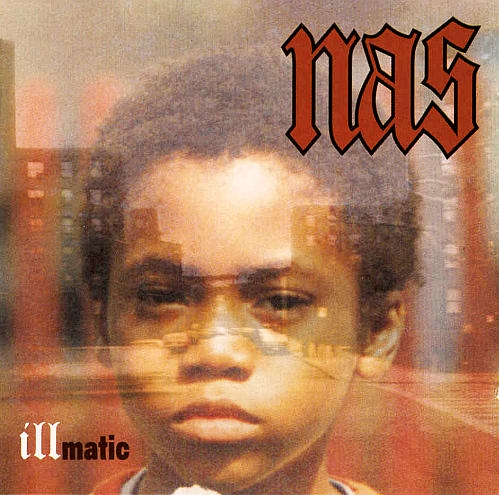
My Favourite Album Cover


Artist -  Nas
Album - Illmatic
Year - 1994

History

This cover was designed by Aimee Macauley and features a picture of a block of apartments in New York City taken by Danny Clinch, where Nas grew up. Superimposed on this is a picture of Nas as a young child. The cover is said to have took inspiration from the Jazz album 'A Child Is Born' which also features a child's face against an urban background, but this hasn't been confirmed by Nas.

Connotations and Denotations

The connotations behind the cover is that it represeents Nas as a young child finally looking and taking in the world around him. Growing up in a deprived New York City area with violence all he seen was a life of crime before reaching an age where he realises there is a world outside of there for his career, and doing the right things. This is personal to the artist reflects the album content found in the album, where he raps about growing up in poverty and the gang lifestyles that surrounded him. These both are the basis for the lyrics in the album.

Target Audience

The target audience behind this cover would be young hip-hop fans and fans of Nas. I imagine people could also relate to the setting of the cover and the ideas behind it, most likely those who live in the deprived apartment blocks of New York and know what it's like growing up surrounded by gang culture and poverty.

What It Means To Me

This cover appeals to me because of the connotations and themes behind it, both the realising there is a world outside the ghetto and poverty as well as a feel-good nature that Nas has made it and became a millionnaire escaping that lifestyle. It is also the symbol I remember behind a classic album and one of the best hip-hop debuts of all time.


Album Covers

Album covers have been a prominent part of music releases for over 5 decades. The definition is:

"An album cover is the front of the packaging of a commercially released audio recording product, or album."


They were first used by Columbia Records in 1938, with the credit going to Alex Steinweiss for coming up with the concept. They then became the norm during the late 40s and since then some sort of design has been used on every album, from the LPs of back then all the way to being included on digital releases (the preferred music distribution of 2013). 

CDs had a period of being very popular during the 90s and 2000s , with the album cover being a prominent part of the marketing and even having a say in the sales. The two main formats were the standard jewel case and the more expensive cardboard Digipak, used mainly for special editions. Even with digital distribution, were a physical copy of the cover isn't provided, they are still a big talking point of major releases and as standard are included with every music purchase on digital marketplaces such as iTunes and Amazon.

The features of an album cover, are usually the album name, the artist, some sort of design either original or took from somewhere (like a photograph, as pictured in 1969's 'Led Zeppelin').
What I also might expect to see are some sort of link to the genre or the concept behind the album, such as Kanye West's 'Yeezus' cover featuring nothing but red tape on a transparent case which reflects the minimal style of the music on the album. I would also expect a familiar symbol of the artist or continuing a style that runs through the discography of the musician.


Wednesday, 11 September 2013

My Group Blog


My group to make a music video comprises of me and Anthony Hill, and we'll be working together closely on our project. If there are no posts on this blog for a long period of time it is likely that we have been focused on the group blog, which you can find and read the posts on here:

Group Blog